
I Thought Explaining Myself was Helpful
Oh, you didn't know what I was TRYING to do? Let me tell you all about it.

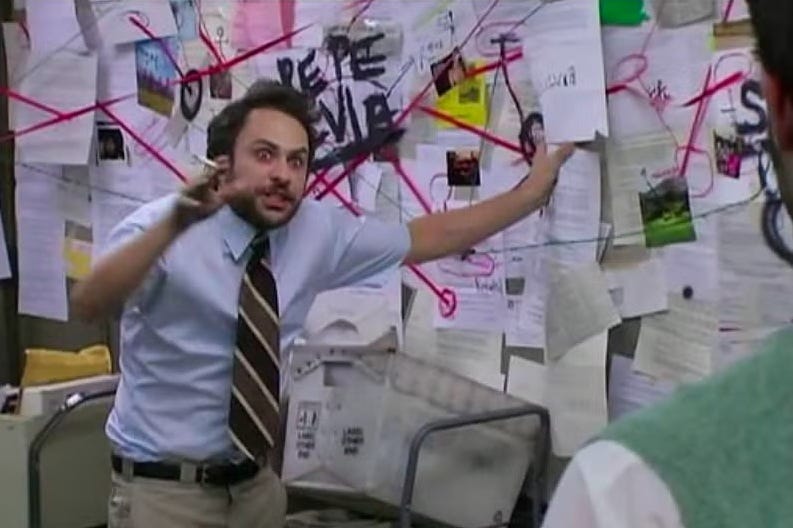
I don’t think people always believe me when I say it, but I swear it’s true:
I can’t remember ever in my life setting out to hurt someone. Thinking: Oooohhh that piece of shit. I’m going to teach them a lesson with what I do next!
I just don’t do that. Not to the biggest pricks on the grade school playground. Not to my school mates. Not to my friends and playmates. Not to my parents. Not to any family members.
Also, I didn’t do this to my girlfriend, who eventually would become my wife.
Because I knew I wasn’t trying to hurt anyone, I spent years believing my intentions were the most important fact in evidence.
As the excellent life and business coach Remi Pearson says: Intention does not equal experience.
Most of the time, people will listen to you defend and explain yourself, give you the benefit of the doubt, and accept that you weren’t out to cause pain and mayhem for them.
But usually not your spouse/relationship partner. They simply do not have the fucks left to give after years and years of:
“Hey Matt! Something’s wrong!”
Followed immediately by: Let me explain how it wasn’t my fault and how you should never express any negative emotions to me, ever!
The Explanation Trap
Have you ever left a conversation thinking: I don’t think they understood me at all?
Meanwhile, your partner is walking away thinking: I explained exactly what happened.
That’s the trap.
In the end, neither person experienced being understood, and both walked away without getting what they actually needed from each other.
People believe explanations create understanding. That’s part of the problem.
One partner says: “That hurt me.”
The other responds: “Here’s why it happened.”
The explanation feels useful to the speaker. The listener often experiences it as: Here’s why your hurt shouldn’t matter.
Explanations are often attempts to self-soothe disguised as healthy relational comms.
Author and therapist Terry Real calls it self-protection.
We explain. We justify. We provide context.
We try to make our actions make sense.
The problem isn’t that the explanation is false. The problem is that the explanation serves the explainer before it serves the relationship.
(article continues below)
Do Something About It
I launched an evening workshop. It literally starts tonight (June 2, 2026) and continues weekly until I quit or die. It’s probably going to kick ass. Relationship work does NOT have to suck.
We meet every week.
Men meet every Tuesday night at 7:30 pm ET for 90 minutes. 15 max.
Couples meet every Wednesday. Same time. 15 max.
Women’s workshop is every Thursday and is being co-led by Erin Clancy Weant, MSW, LCSW. Also the same time. Also 15 max.
I promise nothing will ever change at home until you start doing something differently. That’s the entire aim of the community and program we’re building. Accountability. Support. Homework. Every week you’ll leave with something to practice at home. (Else nothing ever changes.)
We’re going to build skills and change habits that turn shitty relational lives into better outcomes.
If you’re interested but have questions, you can email me directly by hitting reply to this newsletter (or emailing me at mf@matthewfray.com). Happy to talk with you about it.
Your partner isn’t bringing you a case to prosecute. They’re bringing you an injury.
And injuries don’t heal because they’re explained. They heal because they’re acknowledged.
Being right never fixed any of the things that were actually broken.
We have such a hard time feeling like the bad guy.
We struggle to sit with the possibility that someone we love feels hurt because of something we did.
So we rush to our own defense (and do so so much faster and more obviously than we rush to our partner’s defense from emotional injury).
Looking back, I don’t think I was trying to help her understand me. I think I was trying to make sure she knew I wasn’t a bad person. Those are not the same thing.
So we explain. Which feels compassionate to us, but is often so abandoning to them.
That’s why explanations so often backfire.
The listener isn’t thinking: Thank goodness. Now I understand why this happened.
They’re thinking: Why are we talking about YOU right now?
Because the moment someone shares pain, the relationship has a temporary center of gravity.
Their hurt.
Explaining ourselves shifts the center of gravity away from the hurt and back toward the person who caused it.
Even when the explanation is reasonable. Even when it’s true. Even when it’s important.
Context almost always lands better after empathy than before it.
After someone feels understood, they may become curious about your experience.
Before they feel understood, your experience often sounds like a defense attorney making closing arguments.
The next time your partner tells you they’re hurt, see if you can delay the explanation. Just for a minute.
Ask a question instead. Tell them what you think they experienced. Find out whether you’re correct. Stay with the injury before moving to the context.
Because understanding doesn’t usually begin when someone finally explains themselves.
It begins when someone finally stops explaining long enough to understand someone else.
Matthew Fray is the author of “This is How Your Marriage Ends: A Hopeful Approach to Saving Relationships”, a relationship coach, and formerly the blogger at Must Be This Tall To Ride.
If You Want to Dive Deeper
I spend most of my time helping people navigate conflict, communication breakdowns, repair, trust, and long-term relationship pain.
My book, This Is How Your Marriage Ends (1,000+ Amazon reviews, 4.6 stars)
1-on-1 coaching (If you need more flexible time or day options than my scheduling calendar allows, simply reply to this email newsletter that you’d like to schedule a time to meet.)
The new evening-hours Relationship Repair Workshop (seats are limited to 15 per group). This is a small-group coaching experience for people serious about making lasting changes.
I can't wait for me to hurt him so I can practice this.
The other way around is not a contender (yet) but I don't mind being the one to start.
My first comment is of course irony, but I will remember what to do when it happens.
It is, in fact, the weak link in the relationship-chain with my guy. Although neither of us
goes into explain, the missing inquiry, empathy, compassion happens later (for me)
and is not expressed.
Thank you for zero'ing in on yet another situation I'll bet most couples experience.
There is another formula that's slightly different:
Wife: You hurt me. This is why you hurt me [possibly long explanation].
Husband: silence [avoidant attachment]
That might even be worse than an endless explanation.