
The Asking Threshold
In your relationship, what's the cost of asking?

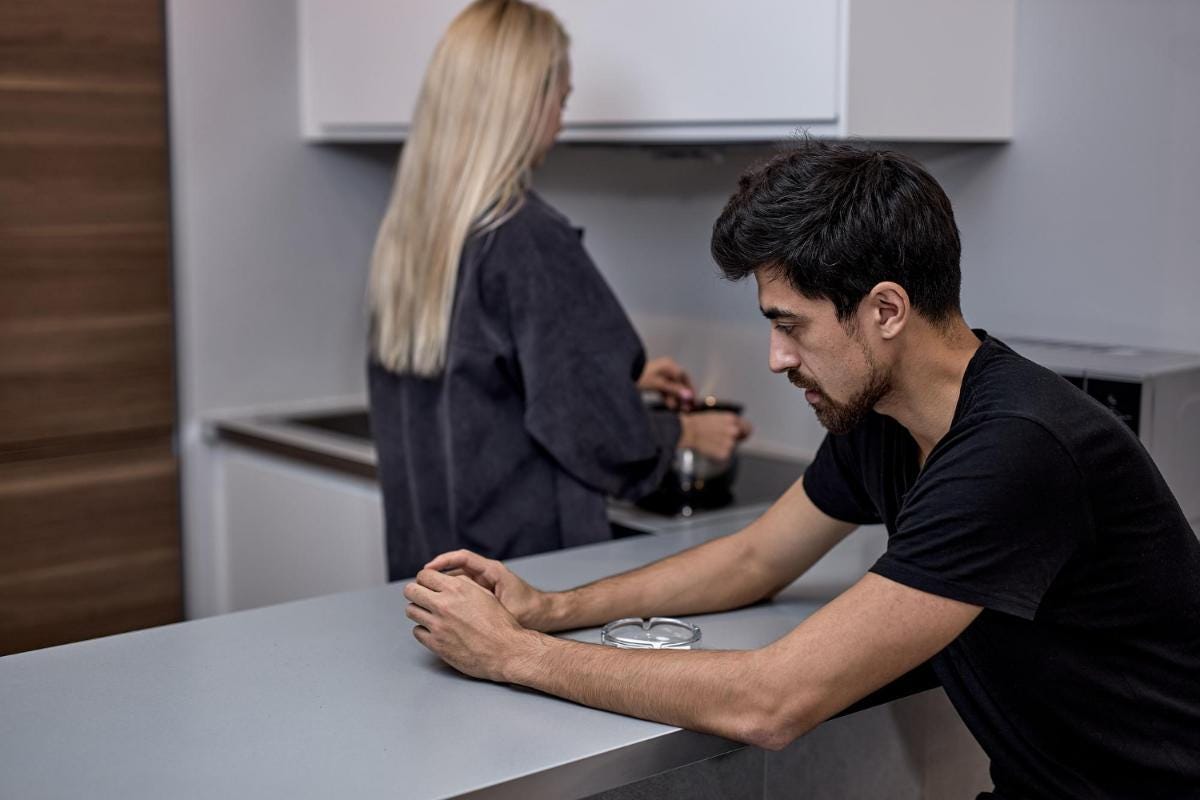
Nobody announces it. Nobody sits you down and says: “Just so you know, bringing things to you doesn’t feel worth it anymore.”
But people have an asking threshold.
In healthy relationships, the threshold stays low.
People ask freely. Can you help me? Can we talk? Would you come to the event with me? Can you please stop doing that? Did you remember the thing? Can I share something with you that might be uncomfortable?
There’s trust that the request itself won’t create a second problem. That’s important.
In struggling relationships, the request often becomes even more emotionally expensive than the original issue.
Now the person isn’t just managing the dishes, the forgotten thing, the parenting stress, the scheduling issue, or the loneliness.
They also must manage your defensiveness, your tone, your shutdown, your explanations, your minimizing, and that feeling that they somehow became the problem for bringing it up.
Human beings adapt to pain. If connection repeatedly feels expensive, people stop reaching for it.
We are constantly conditioning ourselves. Repetition teaches us what’s safe. What’s dangerous. What’s rewarding. What’s exhausting.
Relationships are no different.
Every interaction trains people what to expect emotionally.
So after enough moments of: “You’re overreacting,” and “That’s not what I meant,” and “You always do this,” and “Why didn’t you just tell me?”
And after enough deep sighs, eye rolls, forgotten promises, half-listening, and emotionally vacant responses, the asking threshold rises.
Slowly. Quietly. Almost invisibly.
Until one day someone is standing alone in the kitchen staring at a mess, or sitting in the car before coming inside, or lying awake in bed thinking:
I genuinely do not know if this is worth bringing up.
That moment matters more than most people realize. Because people tend to think relationship breakdowns looks like fighting. Sometimes it does. But often it looks like quiet editing. Filtering. Withholding.
They decide it’s easier to carry disappointment alone than to risk another exhausting interaction.
The scariest threats to your most important relationships aren’t anything obvious, or anything you can even think of.
Relationships are destroyed by what we don’t think about. All the things we don’t see.
The asking threshold is another one of these dangers lurking in the shadow realm.
Rebuild Emotional Safety
A huge percentage of relationship pain isn’t caused by cruelty. It’s caused by people accidentally becoming emotionally unsafe places for each other.
That’s why I created the Relationship Repair Workshop. Not to teach people how to “win” relationship arguments. To help people recognize the invisible moments that either build trust or slowly destroy it.
Because most couples aren’t fighting about dishes, tone, reminders, or text messages. They’re fighting about what those moments MEAN.
The workshop is for people who still love each other, but no longer feel emotionally safe, understood, or connected consistently.
Small groups. Practical tools. Real conversations. No shame. No judgment.
Just people trying to stop the slow drift before it becomes permanent. - MF
Many people choose silence over emotional exhaustion.
That’s the part people miss when they say: “You should have told me.” Often, earlier versions of your partner DID tell you.
Five years ago they told you. Three years ago they told you. Last month they told you.
Back when hope was cheaper. Back when asking still felt somewhat safe.
Becoming a Safer Place to Land
This is the hopeful part:
Most people are not intentionally teaching their partners to stop coming to them.
We can learn how to become safer places to land. It starts with understanding something most of us were never taught:
When your partner brings you pain, frustration, disappointment, loneliness, resentment, or unmet needs, the moment is usually not testing whether you’re correct, or whether what they think and feel is more valid than what you think and feel.
It’s testing whether connection with you feels emotionally costly or emotionally safe.
People don’t need perfection.
They need evidence that vulnerability with you is still safe. That reaching toward you will be met with care instead of consequences.
Matthew Fray is the author of “This is How Your Marriage Ends: A Hopeful Approach to Saving Relationships”, a relationship coach, and formerly the blogger at Must Be This Tall To Ride.
If You Want to Dive Deeper
I spend most of my time helping people navigate conflict, communication breakdowns, repair, trust, and long-term relationship pain.
My book, This Is How Your Marriage Ends (1,000+ Amazon reviews, 4.6 stars)
1-on-1 coaching (If you need more flexible time or day options than my scheduling calendar allows, simply reply to this email newsletter that you’d like to schedule a time to meet.)
The new evening-hours Relationship Repair Workshop (seats are limited to 15 per group). This is a small-group coaching experience for people serious about making lasting changes.
More 🔥🔥🔥!
Thank you, Matthew.
Spot on! This has been a challenge for me recently… sharing things about myself that make me vulnerable , and when I do, it beings minimized and dismissed. It doesn’t feel safe or good to share. Thank you for mentioning half listening. It’s very hurtful.